Pachamama Community, Costa Rica
29. Dezember 2025
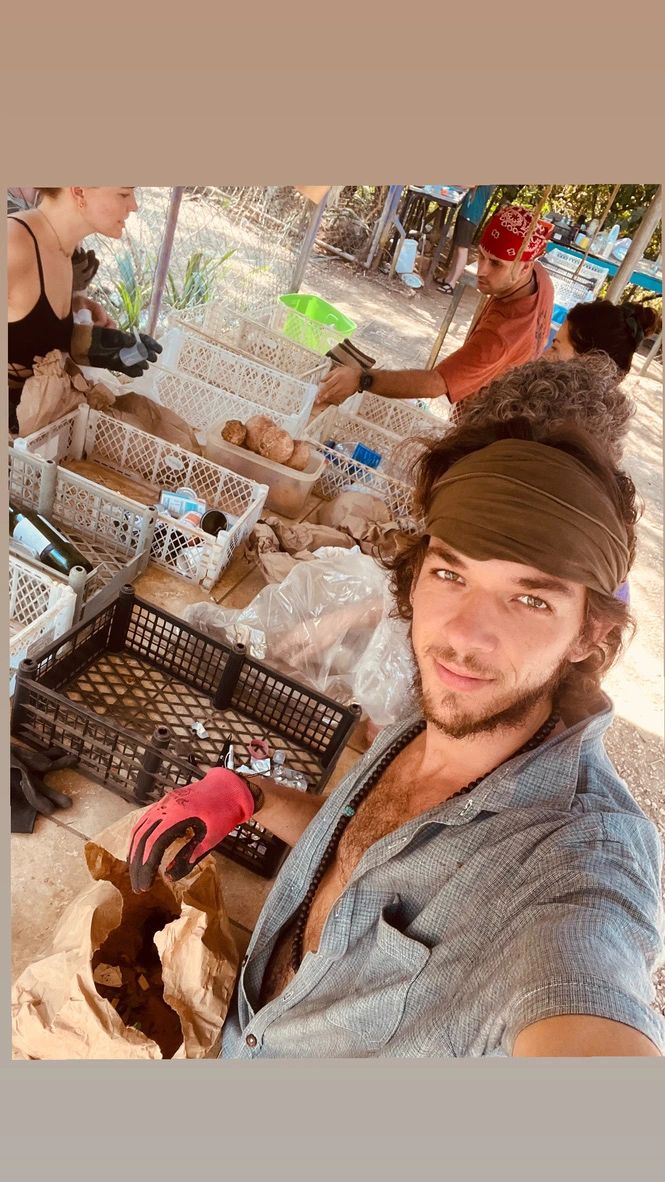 Recelingcenter Pachamama Community
Name: Pachamama Community
Country: Costa Rica
Founded: 2000
Form: Spiritual Leader and Founder
Members: 100-120
Date of Visit: 12.03-25.03.2024
All the information I have here comes from personal conversations with people I met in Pachamama.
Pachamama was founded by Tyohar, who is still the spiritual leader of the PachaMama village today. He himself is of Israeli origin and spent a lot of time in India (Goa) before moving to Costa Rica. Together with 30 people who followed him, he came to Costa Rica.
The goal was to establish an energy field, not necessarily a community. This original intention was consistently palpable to me, indicating that it wasn't about building a community, but about something else.
Regular trance nights with LSD and silent meditation, sometimes for weeks without knowing when Tyohar would end them, were radical and formed the foundation of Pachamama's culture in the early years and continue to this day, though now with clear start and end times.
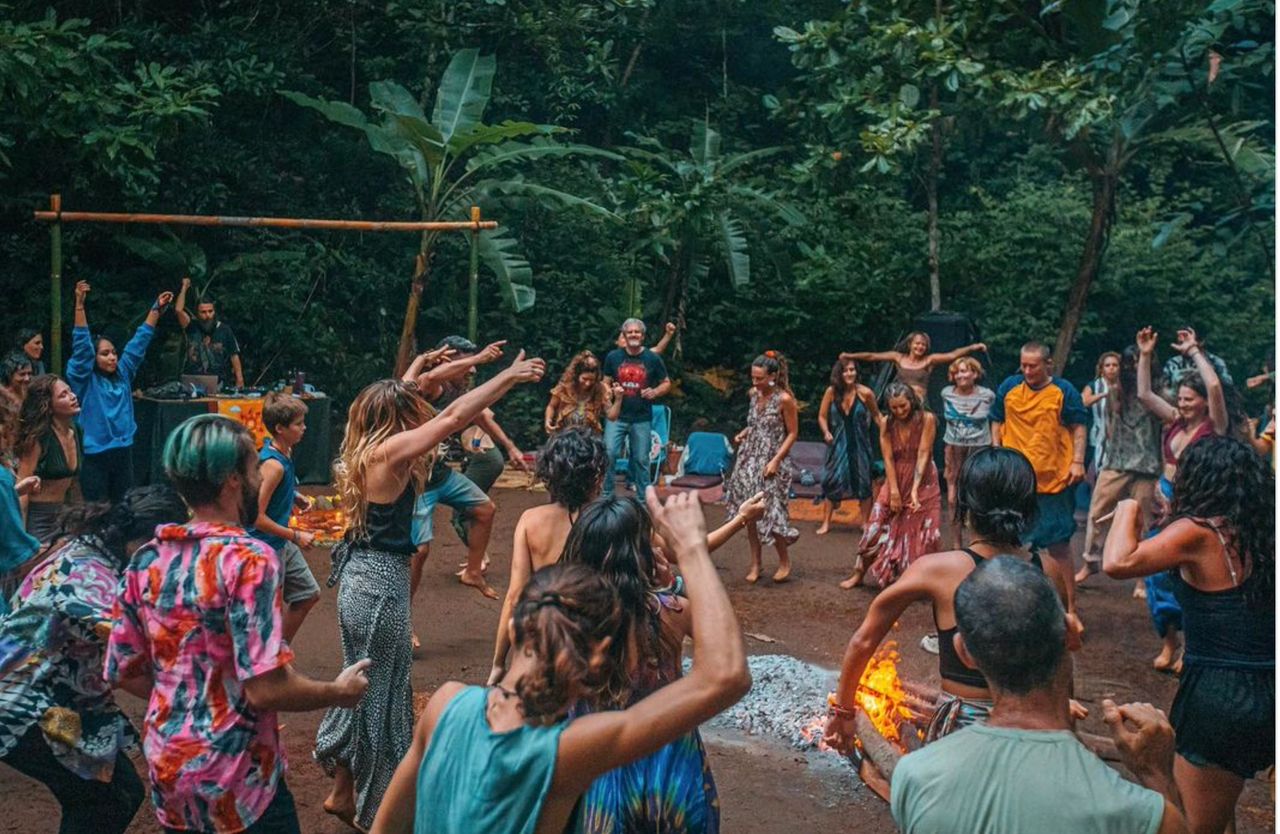 Dance in the Pachamama Community, Costa Rica
During my stay, I mainly felt that it was a business with the aim of being a transformation center.
Many people who come here as guests see Pachamama as a kind of resort and come with the intention of taking a vacation.
What I couldn't perceive was a sense of community. This could be because all decisions in the community are made by the founder and a very small group. So the community members are not involved in decisions. But of course, it could also be because I visited the project as a guest.
Overall, the level of trust I perceived was similar to that in a hotel resort, with clear rules, computer systems, and little room to see and perceive the individual and their needs.
(Fairly high hopes were pinned on this, I must say.)
Financially, in my opinion, there is little solidarity (although the desire for it seems to be great), but the members have to pay for everything themselves. However, they have the opportunity to take on paid jobs or run their own businesses and bring them into the retreat center, for example, offering courses or making tea and then selling it in the in-house store. However, the money does not go 100% to the community, but partly directly to the person who grows the tea.
Overall, the project seems to be financially very lucrative. The fees that guests pay are relatively high for food and accommodation, and it is well attended. I don't know exactly how the money is distributed, but in general, everyone seems to be able to live well from it.
It also runs its own school and kindergarten for around 30 children living there.
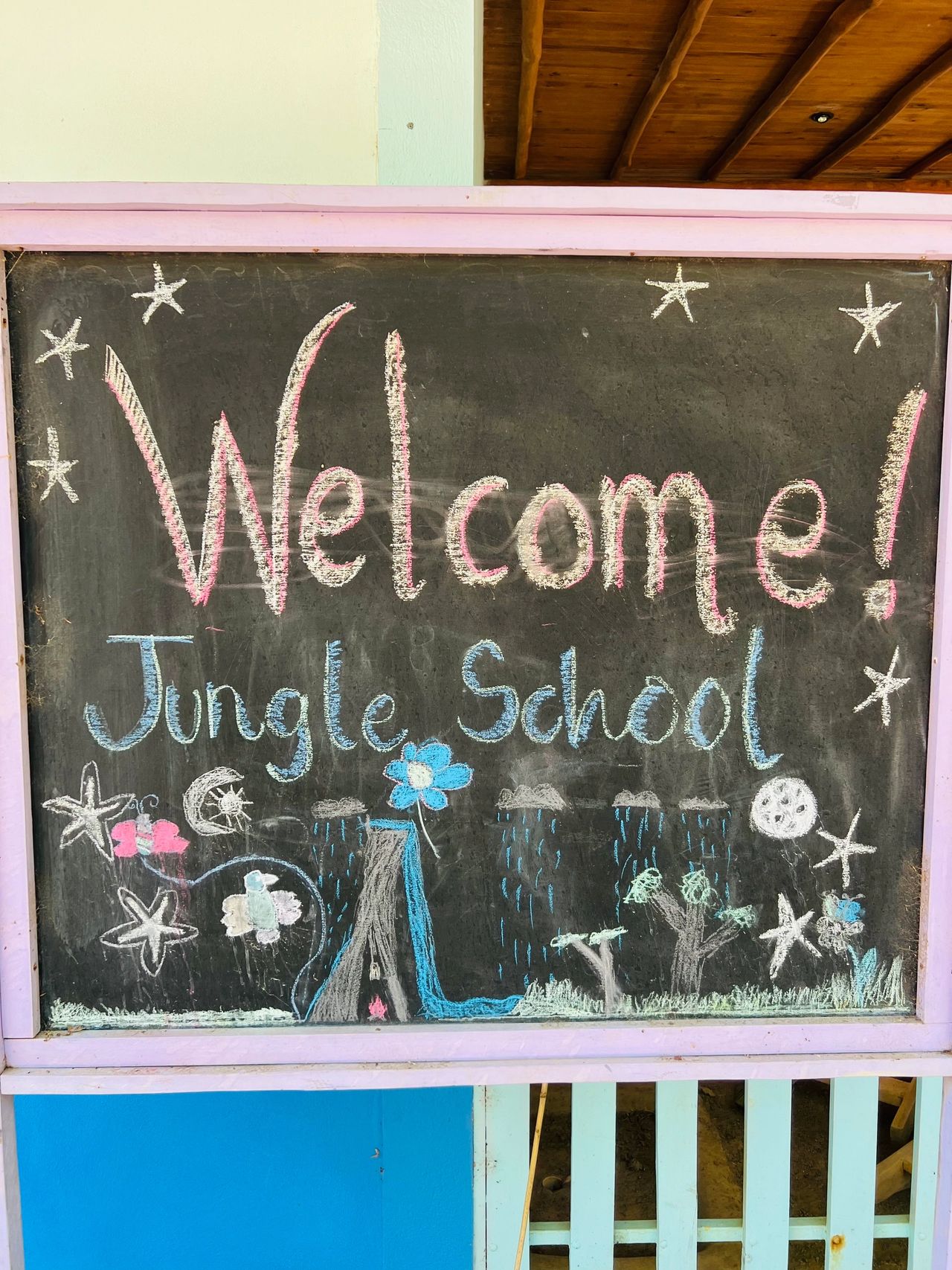 Jungel school Pachamama Comunity
No communication tools like "forum", etc., are used even the community come not together to openly discuss emotions and experiences or even make decisions. According to several members of the community, the community would have broken apart several times if the founder had not been present.
Of the 30 people who were there from the beginning and followed the founder from India to Costa Rica and spend the most time per year in Pachamama for 24 years, according to members, some have sued the founder because they want to sell their houses, but the founder does not allow this or because it was part of the agreement 24 years ago.
A clear vision was not apparent to me. A community member responded to the question about the vision as follows: "Living together authentically with other people in peace and respect for each other."
A central point is the time of silence, which is not called meditation and lasts almost every evening for 45 minutes.
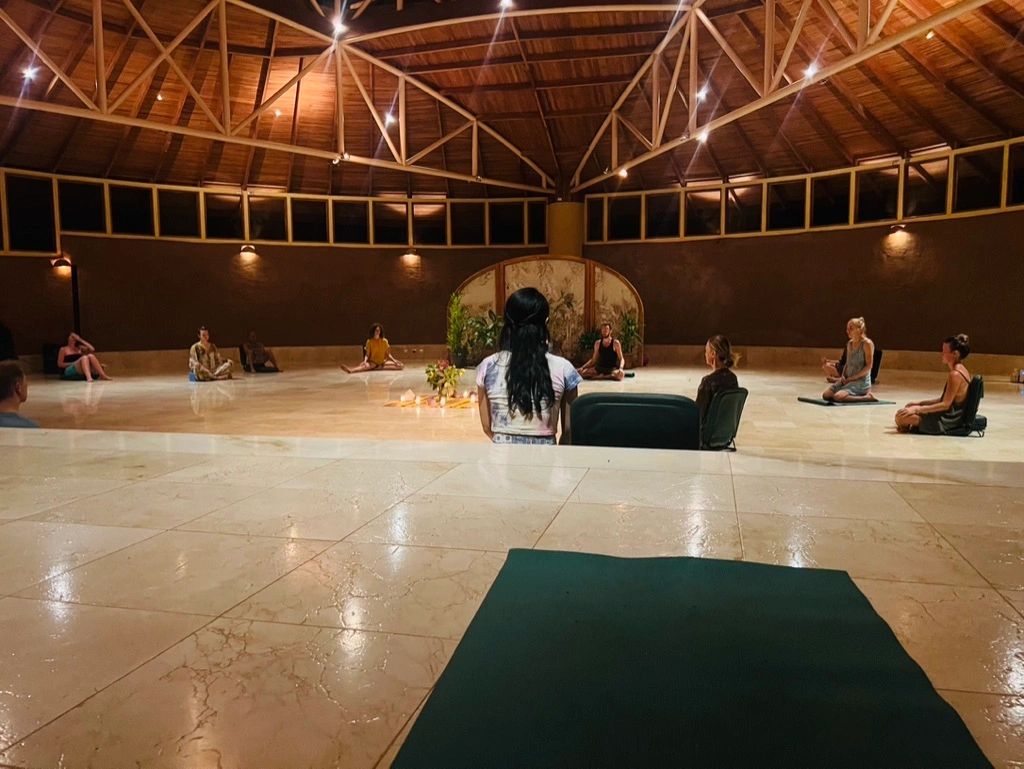 Daily meditation in the Osho hall of Pachamama
A large number of different ceremonies are offered, many of them with plant medicine or synthetic psychedelics.
When I wanted to go to an LSD party where the founder would DJ for 10 hours as the only DJ, and I had previously paid $20, after a 2 km walk in the night to the river where the party took place, I was informed that I had to pay another $120, which I didn't have. So I couldn't attend the event and walked back alone to my casita. From that moment on, there was a strong feeling of not belonging in me.
When I wanted to share my experience in the official internal WhatsApp group the next day, I received some criticism from other guests, but the community members informed me that my "sharing was not welcome", which clearly shows that open and transparent communication is not part of the central DNA of the Pachamama community.
Great importance is placed on the visual appearance of buildings and food in Pachamama, everything is very beautiful and chic. Unfortunately, the prices for food are also very expensive.
I paid between $12-35 per meal.
Issues of love in our society and the suppression of emotions are not publicly perceived or worked on in Pachamama. Most people live monogamously according to my own research.
When asked if they would choose the same land again or move elsewhere, they said they would rather go into the mountains because it is very hot and dry and climate change is very noticeable for them.
In the end, I had very mixed feelings and was disappointed by the lack of trust, solidarity, peace work, and the strong business approach that was noticeable everywhere. At the same time, they have a beautiful reforested land with a river just 10 minutes from the beach, amazing food, ceremonies with plant medicine from around the world with incredible shamans, and many meditation and yoga workshops offered for free every day.
I wish all the amazing and wonderful people I met there the courage to take on more collective responsibility and make decisions, as I believe this is necessary for the project to remain sustainable in the long term.